
penyebab hemiplegia, stroke merupakan penyebab karena kebiasaan, mengatasi stroke sebelah kanan, stroke tidak bisa menelan makanan, cara menghindari stroke ringan, mandiri stroke center, cara mengeluarkan dahak pada pasien stroke, mulut merot, penanganan stroke iskemik, penyebab terjadinya penyakit stroke
What it is Stroke
A stroke, sometimes called a brain attack, occurs when something blocks blood supply to part of the brain or when a blood vessel in the brain bursts.
In either case, parts of the brain become damaged or die. A stroke can cause lasting brain damage, long-term disability, or even death.
What happens in the brain during a stroke?
The brain controls our movements, stores our memories, and is the source of our thoughts, emotions, and language. The brain also controls many functions of the body, like breathing and digestion.
To work properly, your brain needs oxygen. Your arteries deliver oxygen-rich blood to all parts of your brain. If something happens to block the flow of blood, brain cells start to die within minutes, because they can’t get oxygen. This causes a stroke.
Learn more about the signs and symptoms of stroke.
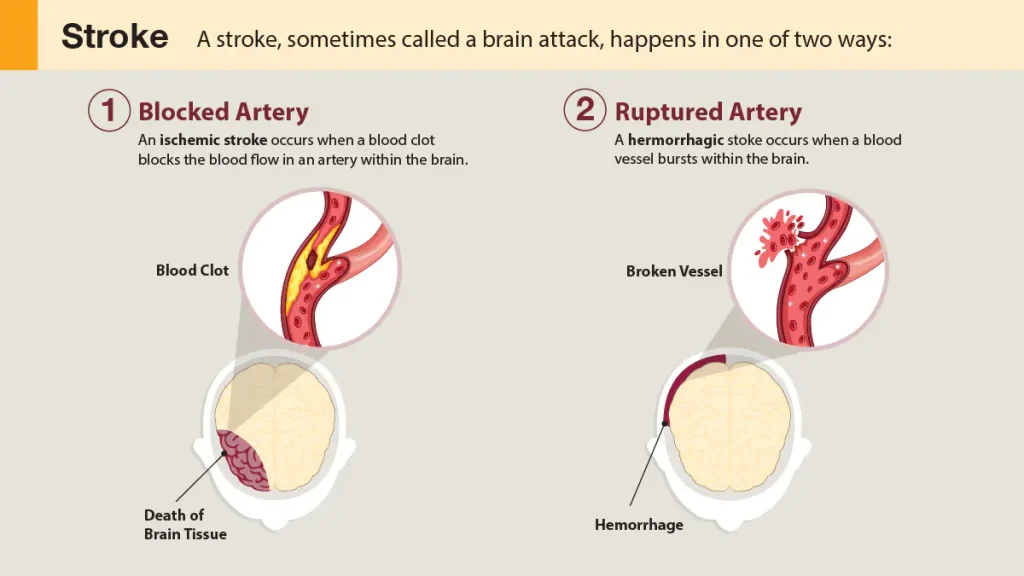
Types
There are two types of stroke:
- Ischemic stroke.
- Hemorrhagic stroke.
A transient ischemic attack (TIA) is sometimes called a “mini-stroke.” It is different from the major types of stroke. Blood flow to the brain is blocked for only a short time—usually no more than 5 minutes.1
Ischemic stroke
Most strokes are ischemic strokes. An ischemic stroke occurs when blood clots or other particles block the blood vessels to the brain.
Fatty deposits called plaque can also cause blockages by building up in the blood vessels.
Hemorrhagic stroke
A hemorrhagic stroke happens when an artery in the brain leaks blood or ruptures (breaks open). The leaked blood puts too much pressure on brain cells, which damages them.
High blood pressure and aneurysms—balloon-like bulges in an artery that can stretch and burst—are examples of conditions that can cause a hemorrhagic stroke.
Transient ischemic attack (TIA or “mini-stroke”)
TIAs are sometimes known as “warning strokes.” It’s important to know that:
- A TIA is a warning sign of a future stroke.
- A TIA is a medical emergency, just like a major stroke.
- Strokes and TIAs require emergency care. Call 9-1-1 right away if you feel symptoms of a stroke or see signs in another person.
- There is no way to know in the beginning whether symptoms are from a TIA or from a major type of stroke.
- Like ischemic strokes, blood clots often cause TIAs.
- More than a third of people who have a TIA and don’t get treatment have a major stroke within 1 year. As many as 10% to 15% of people will have a major stroke within 3 months of a TIA.
Recognizing and treating TIAs can lower the risk of a major stroke. If you have a TIA, your health care team can find the cause and take steps to prevent a major stroke.